5 strong reasons to start in-line thigh deboning

A strategic response to the global trend of rising demand for thigh meat

Thigh Fillets In Tray4

Thigh meat is gaining popularity around the world, not only because consumers appreciate its rich flavor and tenderness, but also because it allows processors to maximize carcass value more effectively. At the same time, labor availability is tightening, and the demand for consistent, boneless thigh products is rising across retail, foodservice, and QSR markets. Modern in-line thigh-deboning systems offer a future-proof answer: high yield, high throughput, and greatly reduced dependency on skilled manual labor.

Here are five strong reasons to make the move to in-line thigh deboning.

1. Demand for thigh meat is rising worldwide

Chicken thigh meat, aka dark meat, is seeing growing popularity globally. Compared to the long-held dominance of breast meat, thighs are increasingly appreciated for their flavor, juiciness and versatility. 
As consumer tastes shift, processors who invest in thigh deboning can tap into expanding markets, including retail, foodservice, fast-casual restaurants and export markets, that value boneless thigh products for their taste and cooking characteristics. 

Thigh Fillet Rolls In A Pan

2. Outperforming skilled labor

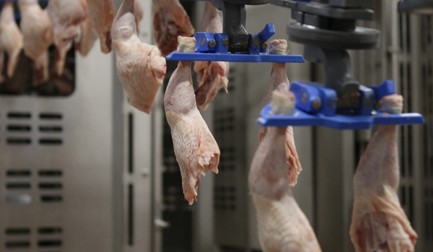
JBT Marel’s in-line Thigh Fillet System reproduces the precision of skilled manual butchering, but in a fully automated, in-line, industrial process. This dramatically reduces the need for manual labor. Because the entire process stays fully in-line, without any manual intermediate handling, trimming, or hand deboning, processors eliminate some of the most labor-intensive steps traditionally required in thigh processing.
With skilled labor becoming increasingly difficult to recruit and retain, this automation provides immediate and long-term relief. Workers no longer need to perform repetitive, physically demanding tasks that often lead to fatigue, inconsistency, or injury. Automating these stages means mimicking previously manual actions with even higher quality, and doing so with extreme consistency, outperforming even the most skilled staff in speed and yield. Processors can run stable production with fewer operators and far less operational risk.

Thigh Deboning

3. A smooth, fully inline process without re-shackling

One of the biggest advantages of in-line thigh-deboning is that it completely removes the need for manual re-shackling, traditionally one of the most labor-intensive and disruptive steps in leg processing. Modern thigh deboning systems are designed to fit seamlessly into the existing in-line processing flow without detours, re-shackling, buffering, or manual handling. In the case of the Thigh Fillet System, the legs stay in the ACM-NT cut-up shackle and are conveyed directly to the deboning carousels without rehanging. 
Eliminating re-shackling not only reduces labor and ergonomic strain, it also prevents stop-start disruptions and inconsistencies. With the cut-up and deboning processes fully synchronized, poultry processing plants benefit from smoother logistics, fewer bottlenecks, higher uptime, and a more stable, predictable product stream, all without having to change the line layout or add more complexity.

off-oz-thigh-filleting.jpg

4. In-line deboning delivers retail-quality at high speed

The role of a thigh deboning system is to safeguard from start to end the high quality and integrity of the anatomic legs as they move through the deboning stages. Its bone-handling mechanisms operate with controlled, gentle movements, avoiding any “aggressive” treatment. So that, even at high line speeds, the system produces consistent “retail-quality” deboned thigh meat with minimal loss of valuable meat. Thigh fillets must have a maximum amount of meat attached, with almost no losses, damage or bone remnants. The thigh meat is smooth without roughness or raggedness. 

JBT Marel’s Thigh Fillet System ensures controlled skinning, bone removal, and an advanced knee-cap removal module, all actions done with great care. The result is a clean thigh fillet every time, with minimal giveaway, maximum meat yield, no bone splinters or remnants, and excellent presentation, ready for retail sale in a tray or further processing with a marinade or coating.

Carcass Balance

5. Better carcass balance

Leg meat represents a significant portion of the broiler carcass, often undervalued. Deboned thigh meat in particular is an underleveraged part. When sold bone-in or as frozen bulk product, its true market potential often goes unrealized. In-line thigh deboning changes this dynamic by transforming dark meat into a premium boneless product with strong demand in retail, foodservice, and further-processing segments. Boneless thigh meat commands higher prices, provides greater flexibility for a wide range of applications, and opens new opportunities in markets that favor flavorful, versatile dark-meat cuts.
This conversion significantly improves the carcass balance. Breast meat no longer carries the full value burden, and the leg portion becomes a meaningful revenue driver rather than a secondary product stream. 
Especially with high-value concept chicken, such as slow-growing, country, native, local, or label breeds, it is an even greater waste to focus only on the breast fillets and leave other valuable parts underutilized, such as legs, wings, and other edible portions. In these cases, carcass balance becomes even more important, contributing significantly to the higher profitability of an in-line thigh deboning line.

In summary: a strategic move

In-line thigh deboning is more than a nice-to-have; it’s a strategic move for poultry processors who want to respond to the global trend of higher demand for thigh meat. At the same time, they can improve their yield and efficiency, reduce labor needs, and maximize value from every product. Processors who adopt advanced thigh deboning automation will be better positioned to lead the market, with retail-quality thigh fillets, flexible production, and a stronger overall carcass balance.


News

Get in touch

Our dedicated team is here to help and answer any questions you may have. Please complete the form, and we’ll get back to you as soon as possible. We look forward to hearing from you.

You can unsubscribe at any time. For more information on how to unsubscribe, our privacy practices and how we are committed to protecting and respecting your privacy, please review our privacy policy.

Login to get full access

Enter password to continue

Wrong password